
A 60-Minute Slow Morning Ritual in the Forest
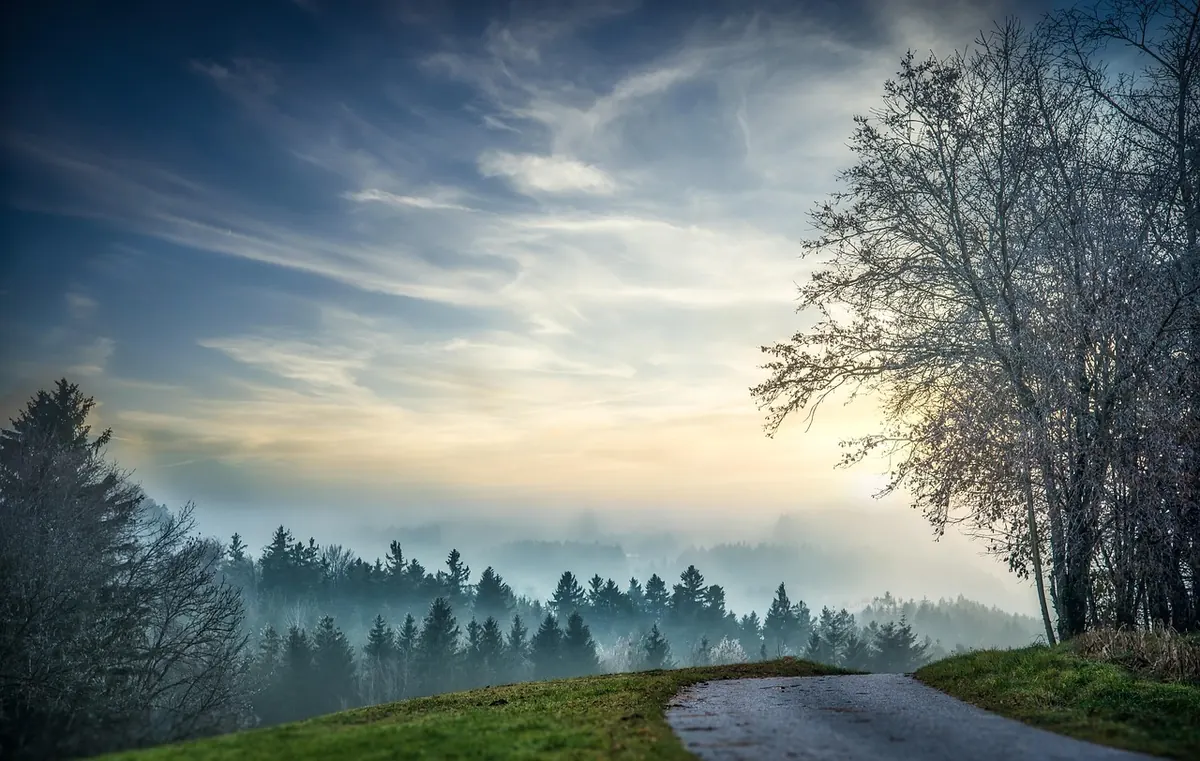
The forest at first light is a different place from the forest at noon. The air sits lower and colder in the hollows. Birds make short, testing sounds before they commit to a song. Somewhere out of sight, something small is turning over leaves. If you arrive early enough and stay for an hour, you get to watch the day assemble itself piece by piece, and you get to assemble yourself alongside it.
This ritual takes sixty minutes, give or take. It is not a workout, a mindfulness performance or a test of endurance. It is a sequence: arrive, breathe, walk, sit, come back. You can do it in a local wood, a town-edge copse or a national park trail, in any season. The only real requirements are a little planning the night before and the willingness to be cold and slightly bored for a while.
Before You Leave the House
Most good mornings outdoors are decided indoors. Lay your clothes out the night before, including the layers you will almost certainly want to shed an hour later. Wool or fleece next to the skin, a windproof outer layer, boots that are already broken in. Cold hands end more morning rituals than rain does, so pack gloves even in spring.
Fill a flask with something hot. Put a headlamp, a small notebook and a pencil in your bag along with water and a spare pair of socks. Leave the phone in the car or in the bottom of your bag, switched to silent. You are not going to miss anything.
Then do the unglamorous part: tell someone which trail you are taking and when you expect to be back. Check the weather and the sunrise time, because you are heading out in low light and the last thing you want is to be route-finding by feel. Pick somewhere familiar and easy to reach for the first few weeks. Novelty is wonderful; it is not what you need at six in the morning.
If you have a heart or breathing condition, or you are returning to exercise after illness, it is sensible to check with a doctor about cold air, exertion and early-morning activity before making this a habit.
Minutes 0 to 10: Arrive and Stand Still
At the trailhead, do nothing. This is the hardest instruction in the whole hour. Do not adjust your laces, do not check your watch, do not start walking. Stand with your feet about hip-width apart and let your weight settle.
Take three slow breaths, each one a little longer on the out-breath than the in-breath. Then stop counting and simply listen. You will hear traffic first, probably, then the layers underneath it: a wood pigeon, water moving, wind in the upper branches, the small dry sounds of the ground.
Give your eyes a few minutes to adjust to the low light. Notice the temperature on your face and where it changes, at your ankles, at your wrists, at the gap at your collar. Resist the urge to identify or name anything yet. Naming is a later pleasure. This first stretch is just about letting the place register on you.
Minutes 10 to 25: The Breathing Walk
Now walk, but with a pattern. This segment is gentle and rhythmic, more about settling the nervous system than covering distance.
- Start walking slowly and match your breath to your steps: in for four steps, out for six. If six is too long, make it five.
- Choose a tree or bend in the path about twenty paces ahead and walk to it as if that were the whole destination.
- At that point, stop, turn around and look back at where you came from. It will already look different.
- Repeat, choosing a new marker each time, for ten to twelve rounds.
- If your mind wanders, which it will, return to counting steps. Nothing has gone wrong.
Keep the pace slow enough that you could hold a conversation without effort. If you pass someone, say good morning and carry on. If you are walking with a friend, agree to do these fifteen minutes in silence and talk afterwards. Silence shared with another person is easier than silence alone, and often deeper.
Nothing you do in this hour needs to be productive. That is precisely the point of it.
Minutes 25 to 40: The Slow Walk
Now halve your pace again. This is the part where a hundred metres becomes plenty. Choose a thread to follow rather than a route: the edge of the path, a stream, a line of older trees, a fallen trunk that ran across the trail all winter.
Look at three depths in turn. First the ground within two metres, where the leaf litter, moss and small plants live. Then the middle distance, roughly ten metres out, at trunk height. Then up into the canopy, if there is one. Most of us spend our lives looking only at that middle band.
Touch things. Bark, a cold stone, wet moss, the resin on a pine. Avoid putting anything in your mouth and wash your hands before eating, particularly if you have been handling unknown plants or soil.
When a bird calls, stop and count to sixty before moving. Something usually happens in that minute. A squirrel crosses, the call repeats, you notice a shape you had mistaken for a stump. Then walk on.
What to Do When You Get Bored
Boredom arrives around minute thirty for most people, and it is not a sign that the ritual is failing. It is the sign that you have finally slowed down enough for it to catch up with you. Sit with it for a moment. Then give your attention a small, concrete task: count ten different textures you can see, or find five shades of green, or follow one sound to its source. Boredom usually dissolves when attention gets specific.
Minutes 40 to 55: Sit and Watch
Find a dry spot with your back against a tree, a rock or a bank. Put something under you if the ground is wet. Then stay put for fifteen minutes, which is longer than it sounds and shorter than it feels.
Let your gaze soften and widen rather than fixing on one point. Peripheral vision is restful, and it is also where movement registers first. Let sounds arrive without going out to meet them.
If you are cold, keep your hands in your pockets and gently flex your toes and fingers. If you are comfortable, do not move at all. The birds and small mammals around you calibrate their behaviour to your stillness, and after ten quiet minutes the wood often becomes noticeably busier.
Keep the notebook in your lap and write three short lines when you leave: one sound, one colour or shape, one question you cannot answer. That is the whole record. It will be worth more to you in a year than any photograph.
Minutes 55 to 60: Close the Hour
Stand up slowly. Take three breaths, the same pattern as at the start, and look once around the clearing as though you were saying a brief, unsentimental goodbye. Then walk back at an ordinary pace. The return leg is not part of the ritual and you do not need to make it slow.
Before you get in the car, write one sentence in the notebook about the morning. Not what you saw, necessarily, but what the hour felt like from the inside.
Keeping the Ritual Alive
Frequency matters less than repetition in the same place. Once a week, at the same time, on the same trail, will teach you more about a forest than a dozen new locations. You begin to notice the small news of the season: the first frost in the hollow, a new burrow, the week the leaves give up.
Weather is not a reason to cancel, only a reason to shorten. Rain means a shorter walk and a longer sit under a thick canopy or a shelter. Wind means staying out of the trees rather than avoiding the woods altogether. On the shortest days, take a headlamp, stick to a trail you know and tell someone your plan.
For mornings when you only have twenty minutes, keep the frame and drop the middle: three breaths at the trailhead, ten rounds of the breathing walk, three breaths at the end. The shape still works, and it is better than skipping the day entirely.
Check yourself for ticks when you get home, particularly in tall grass and bracken seasons, and change out of damp clothes before you sit down with your coffee. Then put the boots by the door, ready for next week. The ritual is mostly built out of small preparations made in advance, and the forest does the rest.
Photo: Franz26 / Pixabay