
What Is Forest Bathing? An Explainer for Skeptics
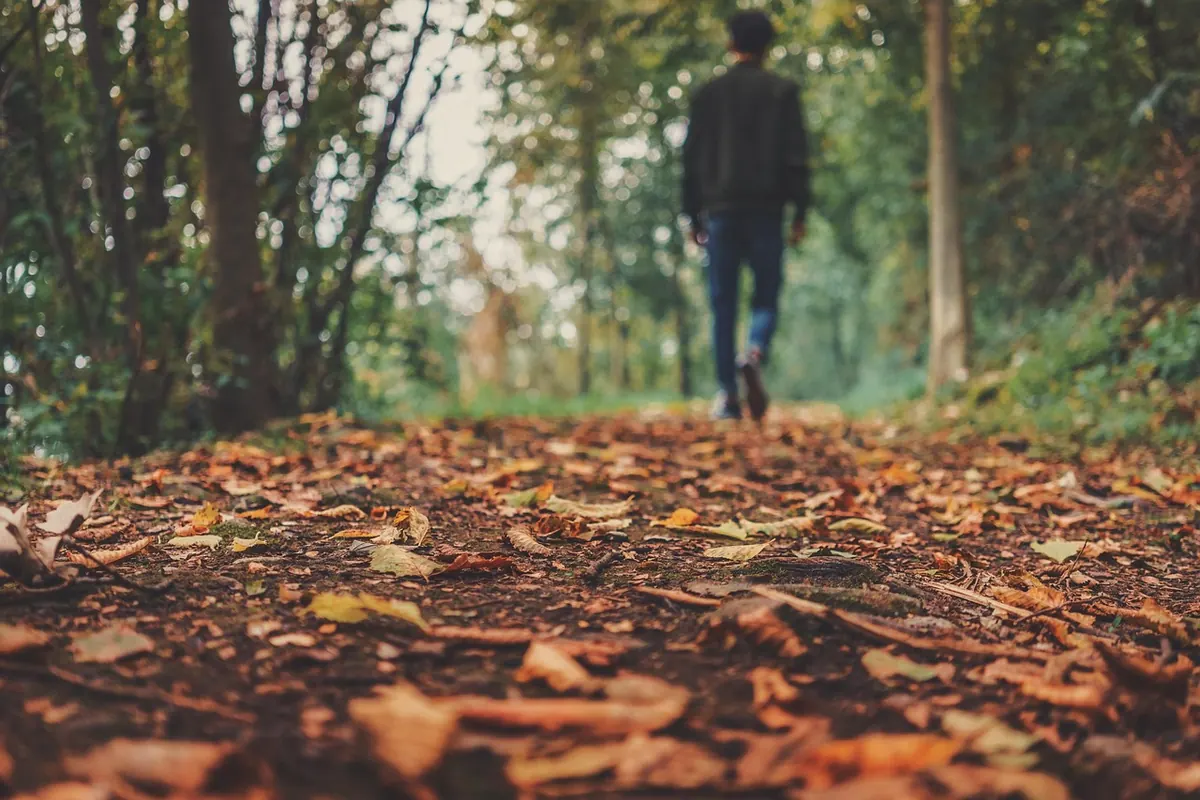
Forest bathing sounds like something sold with a subscription and a branded water bottle. The name does it no favours. It suggests either a spa treatment involving pine needles or a wellness movement with a dress code, and a certain kind of internet writing has done the rest. So it is reasonable to be skeptical. It is also reasonable to be curious, because underneath the marketing is a practice so plain that it barely needs a name: walk slowly among trees, pay attention, stay a while.
What Forest Bathing Actually Is
The term comes from Japan. Shinrin-yoku was coined there in the early 1980s, roughly translating as "taking in the forest atmosphere," and it was promoted as a public health idea rather than a sport. That is the whole origin story. No water is involved, and nobody bathes anything.
In practice, forest bathing is walking in a wooded place at a pace far slower than you would normally walk, with your attention pointed outward — at sound, smell, texture, light, temperature — instead of inward at your to-do list. You are not trying to reach anything. You are not trying to think nothing. You are simply putting yourself in a place with trees and letting your senses do the work.
The clearest way to understand it is by contrast with hiking. Hiking has a destination, a pace and usually a statistic at the end: kilometres, elevation, time. Forest bathing has none of those. Covering four hundred metres in half an hour is normal. Sitting on a log for ten minutes doing nothing measurable is also normal, and arguably the point.
What It Is Not
A lot of the confusion disappears once you clear away the things forest bathing gets bundled with.
- It is not exercise. You can combine it with a walk, but the moment you are chasing a pace or a heart rate, you have left the practice behind.
- It is not religious or spiritual. Some people bring those things to it. You do not need to. There is no belief required, no ritual, no correct feeling to achieve.
- It is not meditation. Not in the sit-still-and-close-your-eyes sense. Your eyes stay open. You keep moving, slowly. Wandering attention is expected, not a failure.
- It is not a chemical treatment. Trees do release airborne compounds, and you will see dramatic claims about them. Treat those claims with caution; the honest summary of the research is that it is promising and mixed in roughly equal measure. The simpler explanations — attention, pace, quiet, light, a break from screens — are the ones that hold up best.
- It is not medicine. If you are dealing with a health condition, physical or mental, forest bathing can sit alongside professional care. It is not a substitute for it, and anyone who tells you otherwise is selling something.
The Skeptic's Case, Taken Seriously
Here is the honest version. Spending forty minutes in a wood will not detoxify your organs, rebalance your energy or add years to your life on the strength of a leaf. What it does do is more modest and more useful than that.
It slows you down, because rough ground and low branches make speed impractical. It removes the low-grade pull of notifications for a while. It gives your attention something to land on that is not a screen and does not want anything from you. Woods are indifferent in a way that is genuinely restful. Nothing there is waiting for a reply.
Most people who keep doing this do it for those reasons, not for the science. They come back and notice they are less wound up than when they went in. That is not a cure for anything. It is a decent way to spend part of a Saturday.
How to Do It Properly, With No Equipment
You need shoes you can walk in and clothes for the weather. That is the equipment list. A mat, a hammock, a flask of herbal tea and a linen outfit are optional at best, and often a distraction — you end up managing your gear instead of noticing the place.
- Pick somewhere close. A wood you can reach in twenty minutes will be used. A famous forest three hours away will be visited once.
- Set a time, not a distance. Twenty-five to forty minutes is plenty for a first attempt. Set a timer if you like, so you are not checking your phone for the clock.
- Leave the destination at home. No summit, no viewpoint, no loop you have to complete. Turn around when you feel like turning around.
- Halve your normal walking speed. Then halve it again. Notice how strange that feels; it usually takes ten minutes to settle.
- Silence the phone. Airplane mode is better than a volume setting. If you are with someone, agree to walk in silence for the first stretch and talk afterwards.
- Sit down at some point. Ten minutes on a stump or a dry bank changes the experience more than any other single adjustment. Sitting is where the noticing happens.
Three anchors for a wandering mind
Your attention will drift. That is fine. When you notice it has, give it one of these:
- Sound. Find the furthest sound you can hear, then the nearest. Move back and forth between them.
- Temperature and texture. Touch bark, moss, a stone, the underside of a leaf. Notice which side of your body the wind reaches.
- Light. Look at what the canopy is doing to the daylight. Look up for longer than feels comfortable.
Mistakes That Make It Feel Like Nothing Happened
The most common is speed. People walk at their usual pace, cover three kilometres, and conclude the whole thing is overrated. They have effectively gone for a normal walk in a nicer place, which is pleasant but not the same exercise.
Headphones come second. Music is not the enemy, but it fills the channel you are trying to open. The small sounds — a blackbird, water moving under leaves, your own footsteps on different surfaces — are most of the experience.
Third is expectation. If you arrive waiting for a moment of transcendence, you will spend the whole time checking whether it has arrived yet. Nothing is supposed to happen. That is not a failure of the technique; it is the technique.
And fourth, weather. People wait for a mild, dry, blue-sky day. Rainy woods are quieter and smell better, and cold woods are sharp and clear. Dress properly and go. Ten minutes of drizzle is not an obstacle; it is the reason the place is empty.
If There Is No Forest Near You
You are not excluded. A park with mature trees works. A canal path lined with limes works. So does a churchyard, a university campus with old oaks, or a row of plane trees along a side street. The principle is the same: a place with trees, visited slowly, with attention rather than ambition.
Consistency matters more than grandeur. One ordinary park visited every Wednesday will do more for you than a spectacular forest visited twice a year. Ten trees you return to become familiar, and familiarity is where the noticing deepens.
A First Session You Can Do This Week
Choose a wooded place within easy reach and give it half an hour.
- Minutes 0–5: Walk in at half speed. Do not choose a route yet. Let your eyes move.
- Minutes 5–15: Find a spot that holds your attention — a view into the canopy, a bend in a path, a fallen trunk — and sit. Use the sound anchor when your mind wanders.
- Minutes 15–25: Walk on slowly, further or back, with no plan. Stop whenever something catches you. Touch things.
- Minutes 25–30: Stand still before you leave. Take one long look back at the place. Then go home.
Notice how you feel on the drive or walk back, not during. Most people report the difference in retrospect rather than in the moment, and that is normal. If it did nothing at all, try once more in different weather before you decide. Some of us are slow to catch on, and the trees are not going anywhere.
Photo: Pexels / Pixabay